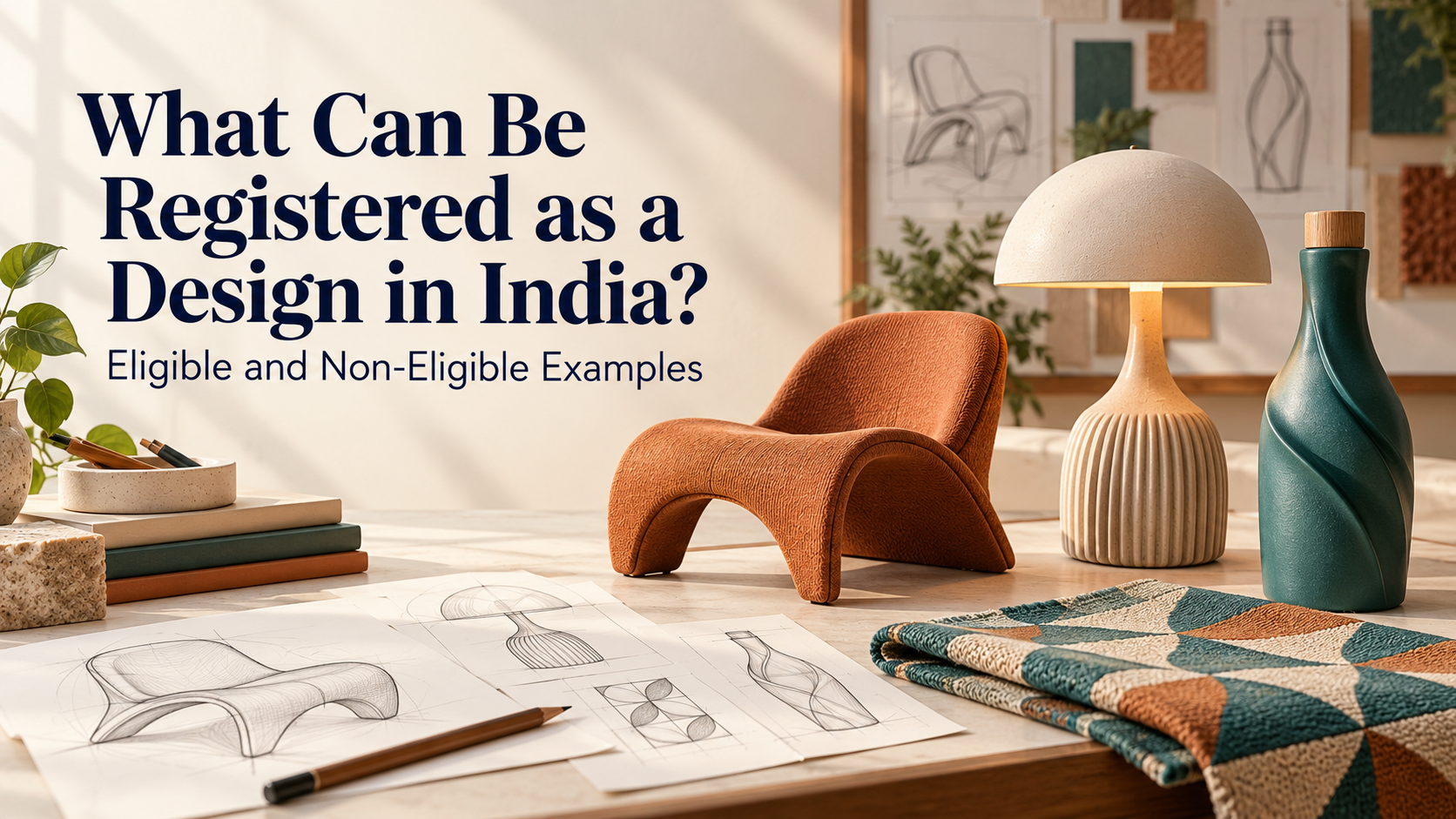
You’ve developed a product that looks different from the alternatives. Maybe it is a sculptural lamp, a patterned container or a chair, with a profile. Before launching it you want to know whether that appearance is protected by law. When looking for design registration in Delhi, you must first know what can be registered. Design is a broad term used in everyday discussions but has a more narrowed definition in legal terms.
A useful product, an attractive drawing and a recognisable logo don’t automatically qualify through the same route. Here’s how to distinguish promising candidates from features that need another kind of assessment.
What Can Be Registered as an Industrial Design?
Qualifying original visual features—such, as shape, configuration, pattern ornamentation or a composition of lines or colours—applied to an article may be registered. The finished appearance of features must appeal to the eye and must be judged by the eye. Eligibility of features also depends on novelty, prior disclosure and statutory exclusions.
In practical terms, ask two questions: what does the product look like, and what makes that appearance eligible?
A product category alone won’t answer them. A bottle may be a suitable article, but a familiar bottle shape doesn’t become registrable simply because your company developed it independently.
What Does the Law Mean by “Design”?
The Designs Act connects protection to visual features applied to an article through an industrial process or means. Those means can include manual processes; “industrial” does not necessarily mean production in a large automated factory.
The definition also distinguishes appearance from construction principles and mere mechanical devices.
For a preliminary assessment, identify:
- The article concerned.
- The visible features you want protected.
- The version intended for production.
- How it differs from existing appearances.
- Whether it has already been shown publicly.
Appearance and Function Are Different
A chair supports someone sitting down. Its backrest outline, arrangement and overall shape may also give it a distinctive appearance.
The functional purpose doesn’t automatically exclude the entire product. The question is whether the proposed protection concerns eligible visual features rather than the operating principle itself.
Think of design protection as addressing the product’s appearance, while a technical invention may require a separate patent assessment.
Eligible Examples: What Can Be Registered as a Design?
The following are illustrative candidates, not statements that a particular design will be accepted. Each needs assessment against existing designs and the applicable requirements.
Product Shapes and Configurations
Potential examples include:
- An unusual perfume-bottle shape.
- A distinctive table-lamp body.
- A new chair configuration.
- A visually different storage container.
- The external housing of an appliance.
Suppose you develop a desk organiser with a distinctive arrangement of compartments and a curved outer profile. Those visible features may deserve assessment.
However, “a desk organiser with compartments” is a general product idea. The application needs to identify the actual appearance.
Surface Patterns and Ornamentation
Protection isn’t limited to three-dimensional shapes. Applied patterns or ornamentation can also be relevant.
Illustrative industrial design examples include:
- A repeating pattern on textile fabric.
- Ornamentation applied to tableware.
- A decorative arrangement on a manufactured panel.
- A surface pattern applied to a container.
IP India’s published records include registrations identifying novelty in textile surface patterns. That demonstrates the relevance of applied appearance, without guaranteeing eligibility for every fabric print.
The important distinction is between a general decorative theme and the particular design applied to the article.
What Is Not Eligible for Design Registration?
Some proposals fail because the appearance isn’t new. Others fall outside the statutory definition.
Official guidance identifies exclusions including previously published designs, insufficiently distinguishable appearances, construction principles, mere mechanical devices, trademarks and artistic works as defined under copyright law.
Known Designs and Minor Changes
A familiar appearance doesn’t become registrable simply because you add your company’s name or make an ordinary variation.
Consider:
- Copying an existing container and changing its label.
- Making a routine workshop alteration.
- Combining familiar features without a significantly distinguishable result.
- Reproducing an appearance already available publicly.
A small change can still require assessment, but don’t assume any difference is enough. Compare the overall visual impression and relevant prior material.
Mechanisms, Branding and Standalone Artwork
A new hinge mechanism or assembly method isn’t protected as a design merely because you draw it clearly.
Likewise, a brand name or logo raises trademark questions. A painting or illustration considered as a standalone artistic work raises copyright questions.
This is where what can be registered as a design becomes more nuanced than “anything creative.” Identify the subject matter and how it is used before choosing the protection route.
Official guidance also lists buildings and structures, along with certain primarily literary or artistic items, among excluded subject matter.
Borderline Cases That Need Closer Assessment
Some products combine several features and rights. A simple yes-or-no checklist may miss those distinctions.
Functional Products With Distinctive Appearance
Consider an appliance casing. It houses working components, but its visible form might include choices that aren’t dictated solely by function.
Discuss:
- Which features are necessary for operation.
- Which reflect visual choices.
- Whether alternative appearances are possible.
- What the proposed representations show.
These questions help frame the assessment. They aren’t an automatic legal test guaranteeing registration.
Packaging and Brand Identity
A package can involve a container shape, artwork and branding. Those elements need separate consideration.
The shape might raise design questions, while the name identifies commercial source. Don’t assume registering one protects everything on the package.
Separately Manufactured Components
The Act’s definition of an article includes a part capable of being made and sold separately.
A separately supplied handle may therefore need a different assessment from an inseparable feature of a complete product. Explain how the component is manufactured, supplied and used rather than submitting an isolated drawing without context.
Textiles and Applied Artwork
An illustration on paper and its application as a repeating textile pattern can raise different issues. Copyright and design law can interact, particularly around industrial application.
For design eligibility India businesses should assess the article, proposed claim and production history together. Avoid assuming either that every artwork qualifies as a registered design or that textile patterns are categorically excluded.
What to Check Before Filing
Once you understand the likely category, examine the actual proposal.
Review Novelty and Earlier Disclosure
Section 4 addresses designs that lack novelty or originality, have been publicly disclosed before the relevant date, or aren’t significantly distinguishable from known designs. Disclosure outside India can also matter.
Review websites, catalogues, product listings, exhibitions and sample circulation. Specific exceptions require assessment; don’t assume an ordinary launch gives you a general grace period.
Prepare Clear Representations
When assessing what can be registered as a design, provide consistent views of the same article. Drawings, photographs or computer graphics should make its appearance understandable.
Official practice guidance addresses representations and disclaimers for matters such as mechanisms, trademarks and extraneous material.
Organise the Supporting Records
Before filing, collect:
- Development drafts and approved versions.
- Creator and ownership information.
- Relevant agreements.
- Clear product representations.
- Details of previous disclosures.
- Comparable products found during research.
A useful consultation starts with those facts. “Our product is unique” is a conclusion; the adviser needs the material behind it.
Frequently Asked Questions
Potentially. A familiar function doesn’t automatically exclude a qualifying new appearance. The proposed visual features still need assessment.
Not automatically. The overall proposal must satisfy the eligibility requirements. Don’t assume a routine colour change establishes novelty.
A settled appearance may be represented through suitable drawings or other accepted representations. You don’t necessarily need completed mass production first.
Assess the product’s eligible appearance separately from the branding. Representations and any disclaimers need careful preparation; the logo doesn’t automatically become protected through the design filing.
No. The application is examined, and the proposed design must meet the legal requirements. An acknowledgement confirms filing rather than approval.
Conclusion
Understanding what can be registered as a design starts with the article’s visible appearance. Identify the features, compare existing designs and check disclosure history before filing. Where function, artwork and branding overlap, assess them separately. Clear representations and ownership records give you a stronger basis for choosing the right protection before the product reaches customers.
Leave a Reply