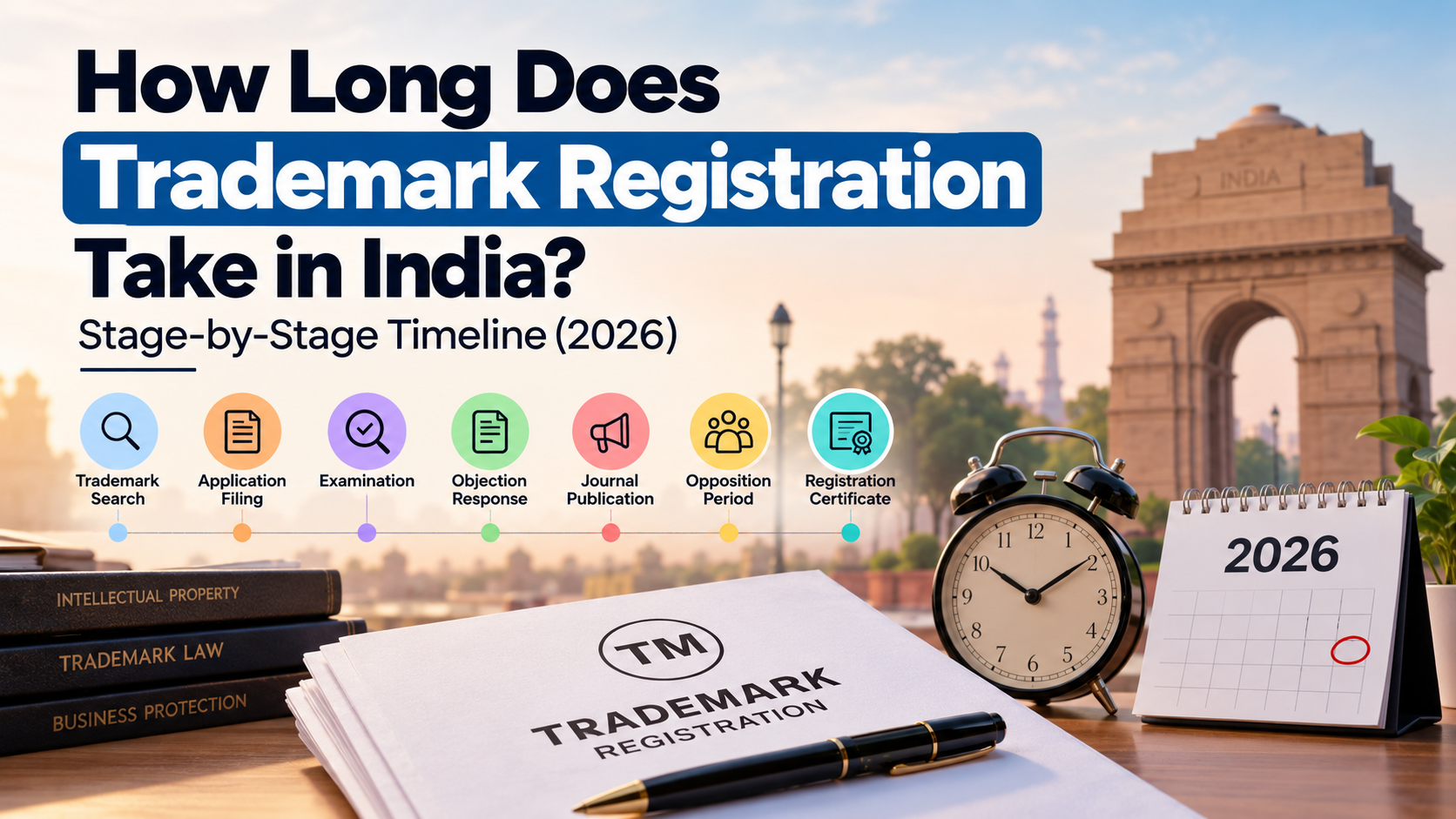
In a case, a trademark can take about six to twelve months and sometimes more. The exact time depends on how a trademark application moves through the Trademark Registry and if any objections or opposition arise. If you plan to register a trademark in Delhi, it is very helpful to understand the trademark process before you begin.
Starting a business involves a lot of decisions. Choosing a brand name is often one of the hardest. You spend time finding something that sounds right, looks good on your products, and represents your business. Naturally, you wouldn’t want another company using the name.
That’s why trademark registration matters. Here’s where people often get confused. Filing an application doesn’t mean your trademark is registered. There’s a process in between. Some parts of it take longer than you might expect. So how much time should you actually keep aside? Let’s look at what happens after you apply.
Trademark Registration Timeline India: What Should You Expect?
There isn’t a fixed number of days for trademark registration services in Delhi. Every application goes through the basic process but not every application moves at the same speed.
If your brand name is distinctive and the Registry doesn’t raise any concerns, things may move smoothly. If there’s a problem with the name or another business challenges it the wait can be much longer.
Here’s an idea of the different stages:
- Trademark search: Usually a few hours to a few days.
- Application filing: Often completed within a day if your documents are ready.
- Examination: Can take weeks or months.
- Objection response: Generally required within one month of receiving an examination report.
- Journal publication: Takes place once the application is accepted for advertisement.
- Opposition period: Four months from the publication date.
- Registration certificate: Issued after the required stages are completed, provided there are no issues.
These are estimates, not guaranteed deadlines. Let’s say you’re launching a clothing label. You file your trademark application in January. Everything goes as planned. You might receive your registration within the year.
Now imagine another clothing business has already applied for a name. Your application could face an objection. That may add months to the process. This is why it’s better to check your name before spending money on the application.
What Happens After You Apply for a Trademark?
Once your application is submitted, it passes through stages before registration. Knowing what each stage means can make the waiting period a little less confusing.
1. First Check Whether Your Brand Name Is Available
Before you file anything, search for existing trademarks. You might think your brand name is unique because you couldn’t find it on Google or Instagram. That doesn’t necessarily mean nobody has registered something similar.
The Indian Trademark Registry has a database where you can look for existing and pending trademarks.
While searching, pay attention to:
- Names that look similar to yours.
- Brands with similar pronunciation.
- Businesses selling products or services.
- Pending applications that might conflict with your name.
For example, if you’re opening a café called “Bean Street,” you should check whether another café or related business already has a trademark.
A proper search won’t guarantee registration. It can help you avoid obvious conflicts.
2. Submit Your Trademark Application
Once you’re comfortable with your chosen name, you can move ahead with filing. For trademark registration in Delhi, applications are submitted through the official trademark e-filing system using Form TM-A. You’ll generally need your business details, the trademark you want to protect, and information about the goods or services you offer.
Some documents may also be required depending on whether you’re applying as an individual, startup, company, or another type of applicant. After filing, you’ll receive an application number. Keep it safe. You’ll need it to check your status later.
Remember, an application number only confirms that your application has been filed. It isn’t proof of registration.
3. The Trademark Registry Examines Your Application
This is when the Registry looks closely at your trademark. The examiner checks whether your mark can legally be registered and whether it conflicts with existing trademarks.
For instance, a name that simply describes your product may be difficult to register because other businesses may also need to use those words. The examiner may also raise concerns if your mark resembles another registered or pending trademark. If there are no issues your application can move forward. If something needs clarification, you’ll receive an examination report.
4. Your Trademark Appears in the Journal
After your trademark is accepted, it gets published in the Trademark Journal.
This stage is important because it gives trademark owners a chance to raise concerns. Suppose you’ve applied for a cosmetics brand and another company believes your name is too similar to theirs. They can challenge your application during this period. The opposition window lasts four months from publication. If nobody opposes your trademark, it can move towards registration.
5. Your Trademark Gets Registered
Once the required stages are complete and there are no issues preventing registration, the Registry can issue your registration certificate. Your trademark is then officially registered.
In India, trademark registration is generally valid for ten years from the application date. You can continue renewing it for ten-year periods.
Why Does Trademark Registration Get Delayed?
If you’ve been waiting for months, it’s natural to wonder whats taking so long. Sometimes the delay is simply because the Registry has a number of applications to process. In cases, something in the application needs attention.
Here are a few common reasons.
Your Brand Name Is Too Similar to Another
This is a problem many applicants run into. Even if two names aren’t spelled the same, they may still be considered confusingly similar. Changing a letter or adding another word doesn’t always solve the problem.
You’ve Chosen the Wrong Trademark Class
Trademark classes identify the products or services your brand will cover. For example, clothing generally falls under Class 25 while cosmetics generally fall under Class 3. If you choose a class that doesn’t match your business, your application may not provide the protection you actually need.
There’s a Mistake in Your Application
It could be something as simple as an incorrect applicant name or a missing supporting document.
Other common issues include:
- Business details.
- Incomplete descriptions of goods or services.
- Missing authorisation documents.
- Incorrect information about trademark use.
These may seem like things but they can create extra work later.
The Registry Has a Backlog
A correctly filed application may take time. Examination schedules, pending cases, hearings, and administrative work can affect processing. That’s why nobody can promise a registration date.
Trademark Objection vs Opposition: Why Does It Matter?
These two terms are often mixed up by first-time applicants.
An objection comes from the Trademark Registry during examination. An opposition comes from another person or business after your trademark has been published.
What If the Registry Raises an Objection?
An objection doesn’t mean your trademark has been rejected. It means the examiner has identified something that needs an explanation. You generally have one month from receiving the examination report to respond.
For example, if the examiner believes your trademark resembles an existing mark you may need to explain why the two are different and why customers are unlikely to confuse them.
If the explanation isn’t accepted, the Registry may schedule a hearing. It’s important not to ignore the report because missing the deadline can result in your application being treated as abandoned.
What If Another Business Opposes Your Trademark?
Let’s say you apply for a footwear brand and another business believes your name is too close to theirs. They can file an opposition within four months of your trademark appearing in the Journal. You’ll then have an opportunity to respond.
Generally, you must file a counterstatement within two months of receiving the opposition notice. After that, both sides may submit evidence. A hearing may be required.
These cases can take longer than applications that face no opposition.
How Can You Track Your Trademark Registration Status?
You don’t need to wait for an email every time something changes. The Indian Trademark Registry provides an application status service.
To check your application:
- Visit the IP India website.
- Open the Trade Marks section.
- Select the trademark application status service.
- Enter your application number.
- Review the status.
You may see terms like:
- Marked for Exam: Your application is waiting to be examined.
- Objected: The Registry has raised an objection.
- Advertised: Your mark has been published in the Journal.
- Opposed: Someone has challenged your application.
- Registered: Your trademark has been registered.
- Abandoned: Your Application is no longer proceeding.
If your status hasn’t changed for a while it doesn’t automatically mean something is wrong. Still checking occasionally helps you catch updates that require action.
Is There Any Way to Get Trademark Registration Faster?
No shortcut lets you skip the requirements. However, you can make the process smoother by avoiding mistakes that commonly lead to delays.
A few things can help:
- Choose a brand name.
- Search for trademarks before filing.
- Select the trademark class.
- Make sure your documents are complete.
- Respond to examination reports on time.
- Check your application status regularly.
India also provides an expedited examination option for applications, through Form TM-M.
Under the rules, the Registry usually tries to look at these applications within three months after the expedited request is made.
Getting an expedited review does not stop the four-month period where others can object or ensure that the trademark gets registered.
Trademark Registration in Delhi: Costs and Help from Experts
If you are starting a business in Delhi, you do not need to go through a process for trademark registration.
The rules are the same across India, and you can file the application online.
How Much Does Trademark Registration Cost in Delhi?
The normal government fees for filing electronically are
- ₹4,500 for each mark, each class for individuals, qualifying startups, and small companies.
- ₹9,000 for each mark, each class for people applying.
These costs do not cover help from professionals.
When looking at trademark registration costs in Delhi, ask if the price includes the filing or also things like checking trademarks and helping with objections.
Should You Use Trademark Registration Help in Delhi?
Not every trademark application needs a lawyer or a helper.
If your brand name is unique and your application is simple, you might be able to do the filing yourself.
But if you are not sure about the class, there are similar trademarks already or you have got an objection, expert help can be useful.
When looking for trademark registration help in Delhi, find someone who explains the process clearly and is honest about the costs.
Be careful of anyone saying they can guarantee approval or get the trademark registered in a number of days.
Frequently Asked Questions
A simple application may take about 6 to 12 months. Some take longer. If there are objections, oppositions or delays the process can become much longer.
Yes you can usually use your brand name while the application is being looked at long as you are not breaking another companys trademark. You can use the symbol but the ® symbol is only for registered trademarks.
You can file the application. Get an application number in that time but finishing the registration in 30 days is usually not possible because the required period for others to object is four months.
Filing online can save time when you are submitting. The review, publication and objection stages still happen.
Depending on the reason, you may be able to fight the decision or file an application. It is important to understand what the Registry is worried about before making a choice.
A trademark that is registered is good for ten years from the date of the application. Can be renewed every ten years.
Conclusion
Waiting for trademark registration can feel like a wait especially when you have already built your business around a name. The process doesn’t end when you click submit. The Registry has to review your application. Other trademark owners might also step in. Object if they believe your name could confuse people or interfere with their rights.
If you really want to protect your brand, you can look for an online trademark registration in Delhi; it is best to start as early as possible. First, check if your name is already used. Make sure your application is complete and correct. Then keep track of where your application’s. You cannot make the Registry move faster. You can avoid mistakes that only make the wait longer.
Leave a Reply