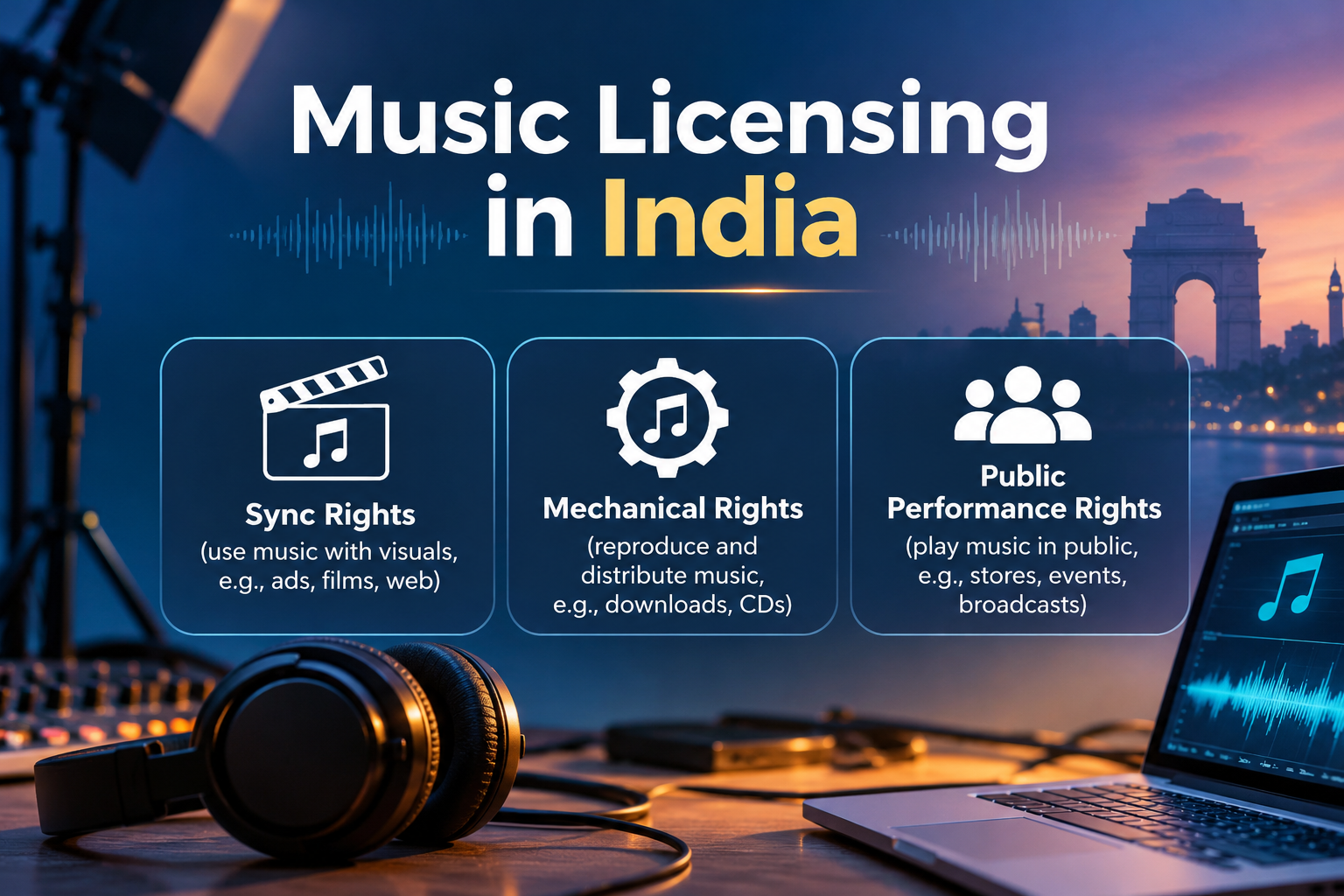
Using music in a business can cause potential issues with copyright. Whether you’re creating content as a filmmaker, content creator or digital marketer, it’s important to understand music licensing in India.
Music isn’t always free to use just because it’s available online. Different uses require different permissions, and choosing the wrong licence can create legal problems. Consulting a copyright infringement lawyer can help you understand these requirements early and avoid unexpected costs, content removal and disputes over ownership.
What Licences Do I Need to Use Music Commercially?
The type of music license you need depends on how you plan to use the music. For example, using a song in an advertisement may require permission from both the composition and sound recording rights holders, while playing music publicly may involve separate licensing requirements.
Common licenses include:
- Sync licenses – Combining music and visual content.
- Mechanical licenses – Reproducing musical work(s).
- Performance licenses – Performing music publicly.
- Master licenses – Using pre-recorded music.
As different people may hold rights to different elements of a song, it’s important to understand who holds the rights to the music.
Understanding Music Licensing India
Licensing music means obtaining permission from the copyright owners to use protected music in a specific way. Musical work(s), lyrics and recordings can be protected separately under the Copyright Act 1957.
Within a song, the composition, lyrics and recording can be owned by different people. Therefore, using the music may involve using rights held by different parties. Licenses will specify what can be done with the music, where it can be used, and for how long.
Types of Music Rights and Licences
Knowledge of different types of music rights will allow businesses to use music responsibly.
Sync Licenses
A sync license means that you are able to combine a musical piece with visual content with the permission of the rights holder. A sync license may be required if creating:
- Advertising (on TV).
- Promotional content.
- Films or documentaries.
- Branding Campaigns.
- Online Video Content.
In general, if a popular song is used in a product advert, permission from the relevant composition rights holder will be required.
A sync licence India arrangement should clearly explain the permitted platforms, territory, duration and commercial purpose.
If using a commercially recorded piece of music, you may also require a master license.
Mechanical Licenses
Mechanical rights relate to reproducing musical work(s). You may need a mechanical license when copying or reproducing music under applicable copyright laws. This could include:
- Physical copies.
- Cover recordings.
- Reproduction of compositions to distribute.
- Certain online distribution of music.
Depending on how the music is being used and any existing licencing, different permissions may be required.
A mechanical license does not automatically mean you can use another parties commercially released music.
Performance Licenses
Businesses may need performance licenses when they play music publicly in places such as:
- Cafés/Restaurants.
- Hotels/Event Venues.
- Shops.
- Internal Business Events.
- Entertainment venues.
Playing recorded music in a restaurant may require copyright authorization, even if you pay for personal music streaming. Authorization will depend on the rights involved and how the music is being used.
Master Licenses
Master licenses relate to using a specific recording of a song. Suppose you wished to use the original studio recording of a popular song in your advert.
Beyond the permission to use the composition, you may require permission from the rights holder of the sound recording. This is very important to consider as a filmmaker, advertiser or digital content creator.
Who Can Grant Music Licenses in India?
One of the biggest challenges in music licensing India is identifying who controls the rights.
Rights may be held by the composer, lyricist, publisher, record company or other rights holder.
Publishers and Composers
Composers and music publishers may own the rights to a musical composition and can grant permission directly or through authorized representatives, depending on their agreements.
Before requesting authorization, you should determine what composition you wish to use and who is legally able to authorize this use of the music.
Record Companies and Copyright Societies
Record companies may own or control commercial recordings, while copyright societies may manage certain rights on behalf of their members. In India, common copyright societies are:
- IPRS – Indian Performing Right Society: Manages rights to certain musical and literary works.
- PPL India – Phonographic Performance Limited: Manages certain usage of sound recordings.
- RMPL – Recorded Music Performance Limited: Manages rights to recordings.
Different permissions may be available and different repertoires of music may be managed by each society. Before paying for music licensing, ensure that the organization has the authority to provide the specific rights.
Licensing Music for Online Content
Although it is easy to find music on online platforms, this does not necessarily mean that you can use it commercially.
Online music rights licensing depends on the platform, the music owner and how the content will be distributed.
Social media (YouTube, Instagram etc)
Many people assume that short pieces of music can be used freely. However, this is not necessarily the case.
Before uploading music to platforms such as YouTube, Instagram, ensure that:
- The platform allows it to be used for commercial purposes.
- The music can be used with the account type.
- The license allows it to be used in advertisements.
- Cross platform distribution is permitted.
- Additional permission is required.
If music is provided within the library, there may be restrictions on it. These may not be the same for all users or campaigns.
Podcasts, Training Material, Website Videos and Educational Content
Businesses often use music in podcasts, training materials, website videos, and educational content. Depending on the purpose, they may need permission to reproduce, synchronize, record, or share the music publicly. Purchasing a song from an online music store does not automatically give you the right to include it in a paid course. Always check the license before uploading commercially.
How to Obtain Music Licensing India Permissions
It will be easier to obtain licenses if you know clearly what you intend to do with the music. Steps to obtain music licenses include:
- Identify the song/recording.
- Decide how the music will be used.
- Identify the copyright holders.
- Check if the work is managed by an authorized licensing body.
- Request permission to use the music in the desired way.
- Review the license conditions and cost.
- Ensure written permission is obtained.
- Make a record of payment and agreements made.
If there are multiple copyright holders, separate permissions may be required.
Costs of Music Licensing
Music licensing costs vary based on the song’s popularity, its intended commercial use, audience size, and the duration of use. Common factors affecting price:
- Type of license.
- Commercial or not.
- Platforms of distribution.
- Location.
- Duration of use.
- Exclusive or not.
- Number of recordings.
Before agreeing to a price for a license, ensure you know what rights you’ll be paying for.
Common Errors with Music Licensing
Sometimes businesses may forget to take music licensing into consideration as it can be easily accessible.
Common errors include:
- Assuming music can be used freely as it has been downloaded.
- Using personal streaming subscriptions for commercial purposes.
- Only obtaining permissions for composition and ignoring recording rights.
- Using music outside of the permitted platforms.
- Not considering the license expiration date.
- Relying on verbal permission.
To avoid confusion, it is best to establish a written agreement.
Legal Risks of Using Music Without Permission
If businesses use copyrighted music without permission, they may face legal and financial implications.
Depending on the situation, the copyright holders may request:
- Removal of the infringing content.
- An injunction preventing further use of the music.
- Compensation or other remedies.
- Prosecution under criminal law.
Using unlicensed music may prompt platforms to restrict your content or disrupt your advertising campaign.
Managing Music Rights
Best practice in managing music rights should be put in place before any issues occur.
If creating advertising, videos or promotional content regularly, a simple system to manage music rights in your business may be useful. This may include:
- Keeping track of any music that has been licensed.
- Keeping a copy of agreements and invoices.
- Keeping track of permitted platforms and regions.
- Keeping track of licence expiration dates.
- Checking permissions before re-publishing.
- Training marketing staff on copyright requirements.
Taking these simple steps can prevent costly mistakes.
When to Seek Legal Help
If there are multiple copyright holders, platforms and commercial agreements to consider in relation to music rights, it may be beneficial to seek professional advice.
For example, a national advertising campaign may require separate licenses for sound recordings, musical compositions, and distribution.
Professional advice can help you determine who holds the rights, understand license agreements and identify limitations to the use of music before publishing it.
Businesses involved in film, advertising or digital entertainment may also find it useful to receive advice on media and entertainment law to help understand how to use music in a commercial way.
F.A.Qs
Yes, however you will generally need permission from the relevant copyright holders. Different licenses may be required to use the composition, recording and in the desired way.
Not necessarily. ‘Royalty free’ relates to a specific type of license. However, you may still be required to pay a cost and comply with restrictions in relation to usage.
Not necessarily. Copyright law may protect even a short piece of music. Whether you can use it without permission depends on the circumstances and any applicable legal exceptions.
Depending on the recordings and rights involved, they may require permission for public performance/communication.
Sometimes, but it depends on the license. Check which platforms your licensing agreement covers to ensure you have permission to use the music on other channels.
Depending on the agreement, you may need to renew your music license or stop using the music once your permission expires.
Conclusion
Businesses using music for commercial purposes should carefully review licensing requirements, identify the rights holders, obtain the necessary permissions, and ensure their licenses cover their intended use. Different rights such as synchronization, mechanical, performance and recording rights, help protect both creators and businesses. Understanding music licensing India will help you avoid disputes, manage costs and confidently use music. If you’re unsure who owns the music rights or which licenses your business needs, consulting a copyright lawyer in Delhi can help you understand the legal requirements and avoid unnecessary risks.
Leave a Reply