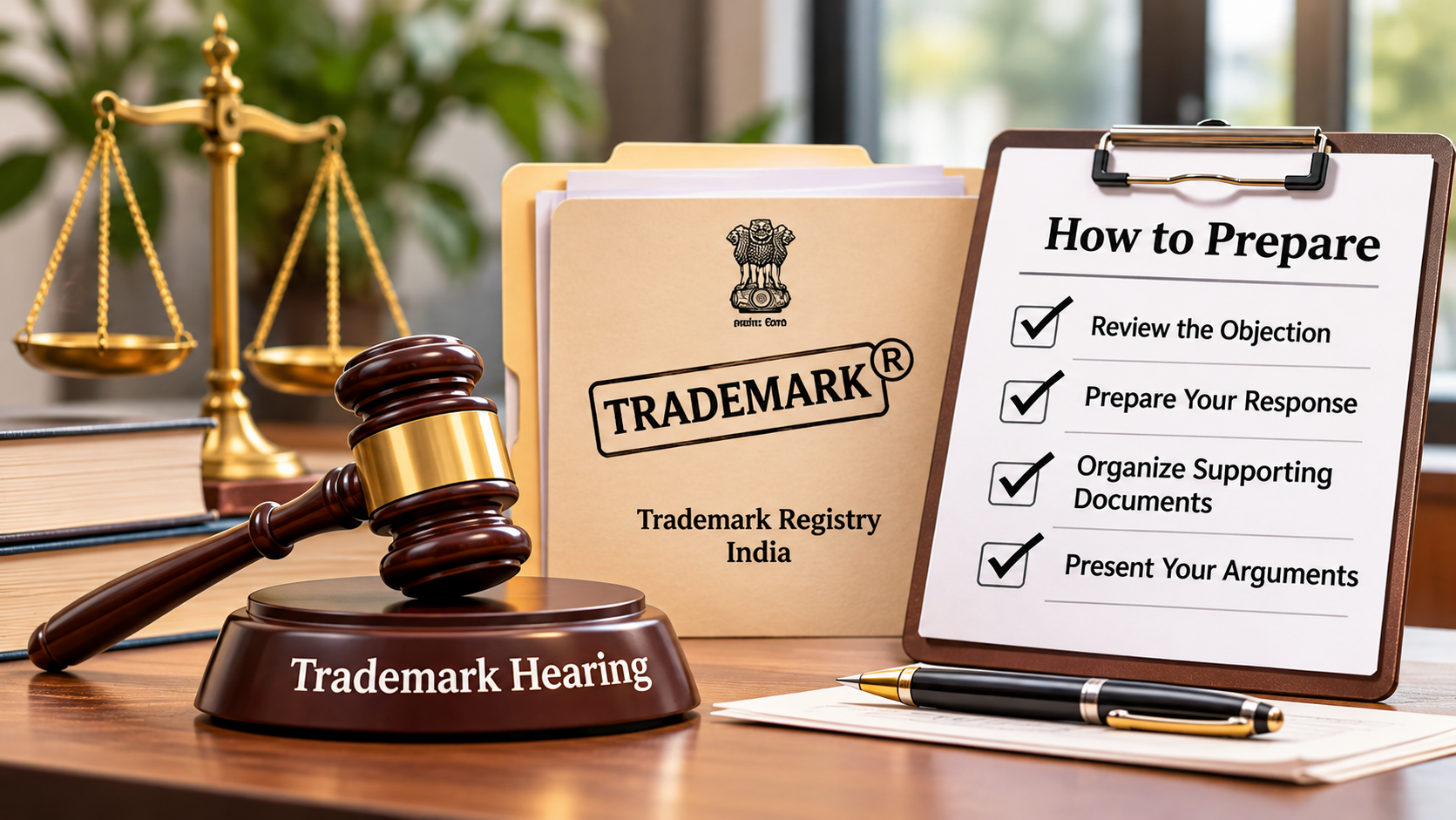
Finally, you take the initiative and complete the application form. Then you send off the documents and wait for them to register your trademark. After a few weeks (or months) you check the status of your application. To your surprise there is a hearing date. This makes you nervous. Has your application been rejected? Do you have to start the whole process again? Not necessarily. The trademark hearing India process gives applicants a chance to explain their case when the Trademark Registry has concerns about a mark. It doesn’t automatically mean your application will fail.
If you’re already using your brand in business, the thought of losing your trademark application can be stressful. That’s why understanding the process matters. Getting proper trademark filing support in Delhi can also help you prepare the necessary documents and respond to objections.
What Happens at a Trademark Hearing?
At a trademark hearing, you or your authorised representative explain why your trademark should be accepted for registration. A hearing officer reviews the objections, considers your arguments, and examines any relevant evidence.
The hearing is usually focused on a specific concern raised during the examination of your application. Here’s how the process generally works:
- The Trademark Registry issues a hearing notice.
- You review the objections and prepare your response.
- You attend the hearing on the scheduled date.
- The hearing officer considers your explanation and documents.
- The Registry communicates its decision or further directions.
You may attend through video conferencing if that’s how the hearing has been scheduled.
Understanding the Trademark Hearing India Process
When you apply for trademark registration, the Registry checks whether your proposed name or logo meets the legal requirements. Let’s say you run a clothing business called “Urban Threads.” You’ve been using the name on your packaging, website, and social media pages.
During examination, the Registry identifies an earlier trademark that appears similar to yours. You receive an examination report explaining the objection. You can submit a written reply explaining why your mark should still be accepted.
If the examiner isn’t satisfied with the reply, a hearing may be scheduled. This is your opportunity to explain the differences between the marks and provide evidence supporting your application.
Why Trademark Hearings Happen
A trademark hearing usually happens because the Registry needs further clarification before deciding whether an application can proceed.
The objections often relate to the nature of the trademark or its similarity to an earlier mark.
Objections Related to Distinctiveness
Some words are difficult to register because they simply describe the product or service being sold. Imagine someone applying to register “Fresh Bread” for a bakery.
The Registry may question whether customers would recognise those words as identifying one particular business or merely as a description of the products. Such objections commonly arise under Section 9 of the Trade Marks Act, 1999.
Similarity With Existing Trademarks
Another common problem arises when a proposed trademark resembles an earlier mark.
For example, two skincare brands may have names that sound almost identical, even though their spellings are slightly different. The Registry may consider whether customers could confuse the brands. These objections are generally examined under Section 11 of the Act.
When a Written Reply Isn’t Enough
After receiving an examination report, applicants generally have an opportunity to explain why the objection should be withdrawn. Sometimes the reply is enough. Other times, the Registry may still have questions.
Perhaps the evidence of earlier trademark use is unclear, or the explanation doesn’t fully address the similarity objection. A hearing allows the applicant to provide further clarification. It’s worth remembering that repeating the same explanation without addressing the Registry’s concerns may not help.
How to Prepare for a Trademark Hearing India
The best place to begin is with the examination report. Don’t rush into collecting every business document you have. First, understand what the Registry is questioning.
Understand the Objection First
Read the examination report carefully and identify the relevant legal grounds. If the objection concerns similarity with another trademark, compare the marks and the goods or services they cover.
If the issue is distinctiveness, consider what makes your brand capable of identifying your business. Your preparation should focus on answering the actual objection.
Gather Evidence That Supports Your Claim
Suppose you’ve been using your trademark for five years. You may have invoices, advertisements, product labels, and website records showing how the name has appeared in business. These documents can help support a claim of trademark use.
Depending on the objection, useful evidence may include:
- Sales invoices and receipts.
- Product packaging and labels.
- Advertisements and promotional material.
- Website screenshots.
- Business records showing the brand name.
- Documents supporting the claimed date of first use.
Make sure the documents are genuine and consistent with the information in your application.
Prepare Your Explanation
You don’t need complicated language to explain your case, but your arguments must have a proper legal basis.
For example, saying “I’ve worked hard to build this brand” may be understandable, but it doesn’t answer an objection about similarity.
Instead, explain the relevant differences between the trademarks and support your position with evidence. A clear explanation is more useful than a lengthy argument that avoids the main issue.
Documents to Keep Ready for the Hearing
Searching for documents at the last minute can make an already stressful situation worse. Before your hearing, keep the important records together.
These may include:
- Trademark application details.
- Examination report.
- Reply submitted against the objection.
- Hearing notice.
- Evidence of trademark use, where relevant.
- Written legal submissions.
- Authorisation documents, where applicable.
If the hearing is online, make sure the necessary digital files are accessible.
What Happens During a Registrar Hearing?
A registrar hearing is generally a formal opportunity to respond to objections raised by the Trademark Registry. The hearing officer may ask questions about your brand name, its meaning, how it’s used, or its similarity to an earlier trademark.
For instance, if your application concerns a name that sounds like an existing brand, you may be asked to explain why customers are unlikely to confuse the two. The officer may also consider the documents you’ve submitted. The hearing is not about proving how passionate you are about your business. It’s about showing why your mark meets the legal requirements for registration.
Arguments That Can Help Your Case
The right argument depends on the objection. A response that works for a descriptive trademark may not work when the problem involves an earlier registered mark.
Showing That Your Brand Is Distinctive
A trademark should help customers identify the commercial source of goods or services. If the Registry considers your mark descriptive, you may need to explain its distinctive features.
In suitable cases, evidence showing that customers have come to associate the mark with your business may support an argument based on acquired distinctiveness. However, using a name for several years doesn’t automatically guarantee registration.
Explaining Differences Between Trademarks
When an objection concerns an earlier mark, the overall impression of the trademarks becomes important.
The Registry may consider:
- How the names look.
- How they sound when spoken.
- Their meanings.
- The products or services involved.
- The possibility of customer confusion.
Simply changing one letter or adding a word may not be enough to overcome a similarity objection.
Possible Outcomes of a Trademark Hearing
Once the hearing officer has considered your explanation, several outcomes are possible. Your application may be accepted and move towards publication in the Trade Marks Journal.
In some cases, acceptance may be subject to legally permissible conditions or limitations. The Registry may also require further clarification or take another procedural step.
If the objections aren’t overcome, the application may be refused. Even when a mark is accepted, registration isn’t necessarily complete. Publication and possible opposition proceedings may still follow.
Mistakes That Can Affect Your Application
One common mistake is assuming that a trademark hearing is just another formality.
Some applicants attend without reviewing the examination report. Others provide documents that have little connection to the objection. Problems can also arise when applicants:
- Miss the scheduled hearing.
- Make unsupported claims of earlier use.
- Ignore similar existing trademarks.
- Submit inconsistent information.
- Fail to prepare relevant arguments.
A little preparation beforehand can make the hearing easier to manage.
Getting Professional Help With Trademark Hearings
Not everyone is familiar with trademark law, and that’s understandable. You may know your brand better than anyone else, but explaining legal issues such as distinctiveness or likelihood of confusion can be difficult.
Experienced trademark lawyers in Delhi can help you understand the examination report, organise evidence, prepare legal submissions, and represent you during the hearing. Professional guidance can be useful when an objection involves complicated legal questions or conflicting trademark rights.
Frequently Asked Questions:
No. A hearing is generally scheduled when examination objections remain unresolved or the Registry considers further clarification necessary.
Yes. Trademark hearings may be conducted through video conferencing, depending on the arrangements specified by the Registry.
Missing a scheduled hearing can have serious consequences, including possible abandonment of the application under applicable procedures. Always check the notice carefully.
The hearing itself may be brief, although the duration depends on the issues involved. The Registry may communicate its decision later.
Yes. If the hearing officer finds that the objections haven’t been overcome, the application may be refused. Depending on the circumstances, legal remedies may be available
No. Acceptance generally allows the application to move forward, but publication and possible opposition proceedings may still need to be completed.
Conclusion
Receiving a trademark hearing notice can be worrying, especially when you’ve already spent time building your brand. But it gives you a chance to explain your application and respond to the Registry’s concerns. Understanding the trademark hearing India process, keeping your documents ready, and preparing clear arguments can help you approach the hearing with more confidence. If you’re unsure about the objections or the documents required, a trademark registration consultant in Delhi can guide you through the process and help you prepare for the next steps.
Leave a Reply